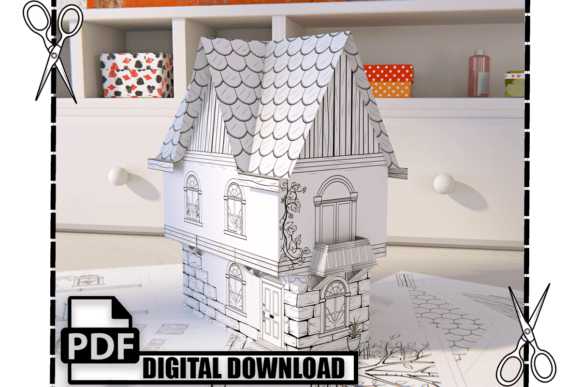
Kids Craft Paper House 3D Coloring Page
When it comes to engaging young audiences and fostering creativity, the Kids Craft Paper House 3D Coloring Page offers a compelling blend of artistry and interactivity. Designed with a modern aesthetic in mind, this digital product merges visual design principles with hands-on learning, making it an ideal resource for parents, educators, and creative professionals seeking impactful tools. The file includes three PDFs: one fully illustrated house, another blank template for personal expression, and a third with step-by-step assembly instructions. It’s not just a craft—it's a thoughtfully structured experience that encourages kids to color, cut, and create their very own 3D paper house.
Visual Design Meets Educational Value
The beauty of the Kids Craft Paper House 3D Coloring Page lies in its ability to serve dual purposes—entertainment and education. As a graphic designer, you’ll appreciate how it leverages visual hierarchy and modern aesthetics to guide children through the coloring process while maintaining a clean, professional layout. This makes it more than just a fun activity; it's a subtle introduction to spatial awareness, structural composition, and even basic architectural concepts.
By incorporating a cohesive color palette, the design ensures that the final product remains visually appealing whether used as a keepsake or displayed publicly. The use of scalable vector elements allows for high-quality printing across various sizes, which is essential when designing for tactile experiences like paper crafts. Consistency in line work and layout also supports readability and ease of use—key components of effective UI design and user-friendly content.
Creative Applications Across Industries
This type of interactive craft can be integrated into a wide range of creative projects. For example:
- Branding and logo design: Use the house as a branded asset in campaigns targeting families or educational institutions.
- Marketing materials: Include the downloadable version as a freebie on your website to boost engagement and conversions.
- Social media graphics: Share before-and-after visuals of completed houses to inspire followers and promote brand loyalty.
- Editorial layouts: Feature the project in kid-focused magazines or blogs to enhance visual storytelling.
- Packaging design: Incorporate the 3D house motif into eco-friendly packaging for educational toys or stationery.
In each of these scenarios, the design reinforces a sense of playfulness and purpose—traits that resonate well with both children and adults. A well-executed 3D paper craft like this can elevate your brand’s creative assets and differentiate your offerings in a crowded market.
Design Tips for Maximum Impact
To get the most out of this type of resource, consider the following best practices:
- Align with brand identity: Choose color schemes and styles that reflect your brand’s personality and values.
- Optimize for usability: Ensure instructions are clear and easy to follow, especially if the file will be used by parents or teachers.
- Test print quality: Preview how colors render when printed, and ensure lines are crisp and precise for accurate cutting.
- Encourage customization: Leave room for users to add their own designs, reinforcing the idea of creativity and ownership.
These considerations help maintain the integrity of the design while allowing for flexibility in application. Whether you're working on a school project, a retail campaign, or a digital product aimed at families, attention to detail and functionality can significantly improve the end result.
Enhancing User Experience Through Interactivity
Interactive design isn’t limited to digital platforms. Physical crafts like the 3D paper house engage users through tactile experiences, enhancing emotional connection and memorability. In UX design terms, this kind of product fosters a sense of accomplishment and satisfaction after completion. When designing such assets, focus on intuitive flow—how the user navigates from downloading the file to assembling the finished piece. Every element should support the goal of creating a seamless, joyful experience.
Typography plays a subtle but important role here too. Clean, legible fonts in the instruction manual and labels within the design help guide users without overwhelming them. This is especially crucial in multi-use contexts where clarity can mean the difference between confusion and delight.
As the demand for experiential and educational content grows, resources like the Kids Craft Paper House 3D Coloring Page become invaluable. They provide a tangible way to connect with younger audiences while maintaining a professional and polished look. By thoughtfully integrating such assets into your design workflow, you can create meaningful interactions that align with current trends in digital marketing and visual communication.
Ultimately, the success of any creative project hinges on the balance between form and function. With the right attention to detail, this 3D coloring page can become more than just a craft—it can evolve into a powerful tool for storytelling, branding, and engagement.